Imported vs Australian-Made Kimchi: How to Choose (2026 Guide)
Oct 29, 2026
Is imported or Australian-made kimchi better?
Neither is automatically better. Imported kimchi must meet Australian food safety requirements and is often more affordable. Australian-made kimchi usually has a shorter supply chain, fresher production and clearer traceability. The best way to choose is to check where the kimchi was made, where the cabbage was grown and who the producer is.
Where Does Your Kimchi Come From?
Where Does Your Kimchi Come From?
In Korea, many people prefer kimchi made in Korea, just as many Australians look for locally made food at home. Price matters too. Some people choose imported kimchi because it is more affordable, and there is nothing wrong with that.
But for something we eat every day, it is worth knowing a little more about what goes on our table. Consumers are paying closer attention to food handling, ingredient sourcing and how far a product travels before it reaches the fridge.
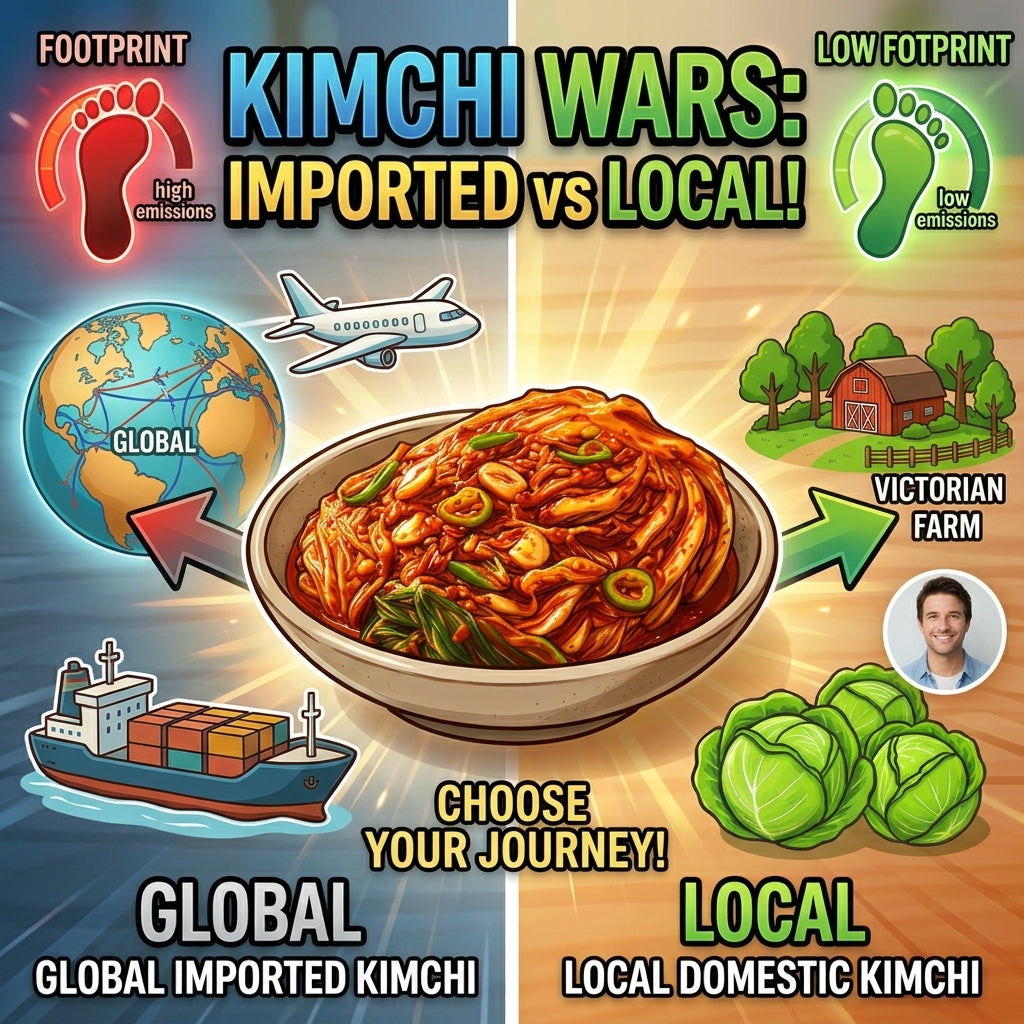
This doesn’t mean imported kimchi is unsafe. Imported food has to meet Australian food safety requirements. The difference is the journey: from the cabbage farm, to the factory, through transport and storage, and finally to your home.
Imported Kimchi vs Australian-Made Kimchi:
What’s the Difference?
The biggest difference is usually the supply chain.

| Imported kimchi | Australian-made kimchi | |
|---|---|---|
| Where it’s made | Overseas factory | Australian Factory |
| Journey to you | Packaged, shipped long distances, then distributed across Australia | Made locally and distributed within Australia |
| Cabbage origin | Usually grown overseas | Can be sourced from Australian growers |
| Freshness | Varies with transport and storage time | Shorter time between production and customer |
| Price | Often more affordable | Often higher, reflecting local ingredients and production |
What Should You Look For When Buying Kimchi?
Imported kimchi is not necessarily bad. There are many imported products in Australia, and people choose them for good reasons, including price, flavour and availability. The key is to understand what you are buying.
Here is a simple checklist to use in store or online:
- Where was the kimchi made? Look for “Made in Australia” or “Product of …” on the label.
- Where does the cabbage come from? Check for origin statements such as “made in Australia from local and imported ingredients.
- How far has it travelled? A shorter journey generally means less time between production and your fridge.
- Is it naturally fermented? Check the label or ask the producer.
- Does the producer share its food safety standards? For example, certifications such as FSSC 22000.